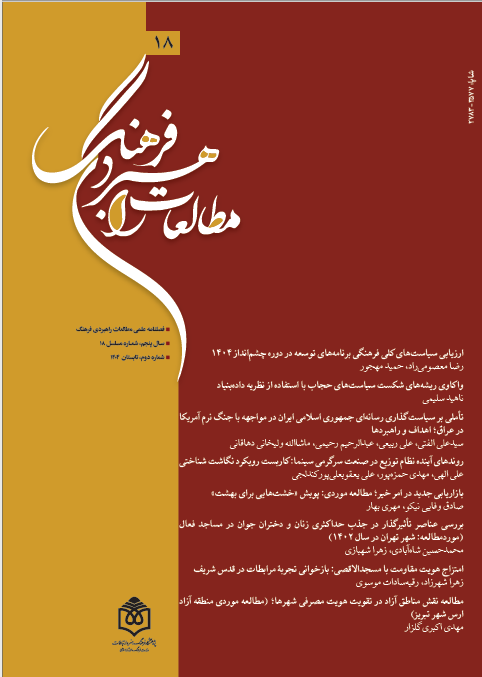
فصلنامه علمی مطالعات راهبردی فرهنگ

فصلنامه علمی مطالعات راهبردی فرهنگ

مطالعه نقش مناطق آزاد در تقویت هویت مصرفی شهرها؛ (مطالعه موردی منطقه آزاد ارس شهر تبریز)

نوع مقاله : مقاله پژوهشی

نویسنده
دکتری مردم شناسی، دانشکده علوم اجتماعی، دانشگاه تهران، تهران، ایران
چکیده
ایده تأسیس مناطق آزاد در کشور با هدف ایجاد منطقه‌ای که موتور توسعه کشور باشند از همان سال‌های ابتدایی پس از جنگ و در برنامه اول بودجه شکل گرفت. اجرای این ایده و تأسیس چندین منطقه آزاد در نقاط مختلف کشور، طبیعتاً با خود اقتضائیاتی به همراه دارد که از مهم‌ترین آن‌ها تأثیرات عمیق اجتماعی-فرهنگی در این مناطق است. در این تحقیق این تأثیرات اجتماعی فرهنگی با تأکید بر منطقه آزاد ارس و شهر تبریز و با روش گراندد تئوری مورد بررسی قرار گرفته است. نتایج به دست آمده گویای آن است که منطقه آزاد ارس جدا از اینکه به هیچ یک از اهداف اولیه مناطق آزاد مانند توسعه صادرات به جای واردات، تأکید بر مزیت‌های نسبی و به کارگیری تجارت خارجی در جهت اهداف داخلی دست نیافته است؛ بلکه کاملاً برعکس به منطقه‌ای تبدیل شده است که در آن مصرف بر تولید اولویت یافته است. کالاهای داخلی توان رقابت با کالاهای خارجی که با تسهیلات ویژه از منطقه آزاد وارد می‌شوند، ندارند و در نتیجه کارخانه‌های تولیدی به وضعیت نامساعدی دچار شده‌اند و شهر تبریز تحت تأثیر منطقه آزاد از یک شهر تولیدی به یک شهر مصرفی تبدیل‌شده است که در آن هویت مصرفی، تجمل‌گرایی و مصرف‌گرایی تجملاتی بسیار پررنگ شده است.
کلیدواژه‌ها

عنوان مقاله English

Studying the role of free zones in strengthening the consumption identity of cities; (Case study of Aras Free Zone, Tabriz)

نویسنده English

Mahdi Akbari Golzar
PhD in Anthropology, Faculty of Social Sciences, University of Tehran, Tehran, Iran. Mail: m.akbarigolzar@ut.ac.ir
چکیده English

Introduction: The idea of ​​establishing free zones in the country with the aim of creating a region that would be the engine of the country's development was formed in the early years after the war and in the first budget plan. The implementation of this idea and the establishment of several free zones in different parts of the country naturally brings with it certain requirements, the most important of which is the profound socio-cultural impacts in these areas. In this research, we will try to identify and evaluate these socio-cultural changes under the influence of the Aras Free Zone and find out what factors caused such fundamental changes to occur in the city of Tabriz? Our main question in this research is what social and cultural impacts do free zones have on their surrounding area? And specifically, what socio-cultural impacts does the Aras Free Zone have on the city of Tabriz?
Research Methodology: In this study, the grounded theory method was used with the interview tool. A total of 28 useful interviews were prepared and after transcribing and transcribing all the interviews, an attempt was made to extract the main meaning and meaning of the words of the interviewees using open coding. We reached repetition from the twentieth interview, and repetition is the first sign of reaching theoretical saturation. In reviewing the data extracted from the interviews, we even went as far as several interviews to make sure exactly whether another finding could be added to the research or not. These additional interviews did not yield any new data for us.
Research findings: The results obtained indicate that the Aras Free Zone, apart from not achieving any of the initial goals of free zones, such as developing exports instead of imports, emphasizing comparative advantages, and using foreign trade for domestic purposes, has completely turned into a zone in which consumption has taken priority over production. Domestic goods are unable to compete with foreign goods that are imported from the free zone with special facilities, and as a result, manufacturing plants have been put in an unfavorable situation, and the city of Tabriz, under the influence of the free zone, has transformed from a manufacturing city into a consumer city, in which consumer identity, luxury, and luxury consumerism have become very prominent. However, it seems that most of the citizens of Tabriz are interested in this process and are very satisfied with it. Thus, it can be said that apart from the basic and theoretical discussions regarding modernization, this process is inevitable and no escape from it is conceivable, at least until today. The only way forward is to use the many years of experience of various countries that have taken this path and to use the advantages of the processes taken and to avoid its disadvantages.
Conclusion: Analysis of the interviews and studies conducted shows that the Aras Free Zone has caused a fundamental transformation of the city of Tabriz and has led to an increase in the desire for consumption among the people of Tabriz. Among the consequences that were expressed under the title of socio-cultural impacts of the city of Tabriz, we can mention the beauty of the urban appearance, the expansion of consumer identity, the priority of consumption over production, luxury consumerism, the transformation of the identity of the city of Tabriz, the unfavorable situation of the surrounding factories, the increase in youth unemployment, and the weakening of the domestic economy. This ultimately leads to the emergence of a "consumer identity" that is the result of these fundamental changes in the social and cultural processes of the city of Tabriz affected by the Aras Free Zone.

کلیدواژه‌ها English

Free zone
consumer identity
luxury
consumerism
Tabriz
منابع و مآخذ
استراس، آنسلم، کوربین، جولیت (1387). اصول روش تحقیق کیفی؛ نظریه مبنایی، ترجمۀ بیوک محمدی، تهران: پژوهشگاه علوم‌انسانی و مطالعات فرهنگی.
استیک، رابرت (1379). هنر پژوهش موردی، ترجمۀ محمدعلی رفیعی، تهران: دفتر پژوهش‌های فرهنگی.
بلیکی، نورمن (1384). طراحی پژوهش‌های اجتماعی، ترجمۀ حسن چاوشیان، تهران: انتشارات نی.
بودریار، ژان (1390). جامعه مصرفی؛ اسطوره‌ها و ساختارها، ترجمۀ پیروز ایزدی، تهران: نشر ثالث.
ژلنیتس، آندری (1396). فضا و نظریه اجتماعی، ترجمۀ آیدین ترکمه. تهران: انتشارات علمی و فرهنگی.
ساروخانی، باقر (1381). اصول و روش تحقیق در علوم اجتماعی، تهران: پژوهشگاه مطالعات فرهنگی و علوم انسانی.
فتح‌الهی، سعید (1377). مناطق آزاد ایران، تجربه‌ای ناکام و ضرورت بازنگری اساسی، مجله فرهنگ و تعاون، 5 (2)، 197-232.
کاظمی، عباس (1394). پرسه زنی و زندگی روزمره ایرانی، تهران: انتشارات فرهنگ جاوید.
گل‌محمدی، احمد (1393). جهانی‌شدن، فرهنگ، هویت، تهران: نشر نی.
مارشال، کاترین، راس‌من، گرچن (1381). روش تحقیق کیفی، ترجمه علی پارسائیان و سیدمحمد اعرابی. تهران: دفتر پژوهش‌های فرهنگی.
هاروی، دیوید (1391). تاریخ مختصر نئولیبرالیسم، ترجمۀ محمود عبدالله‌زاده، تهران: انتشارات دات.
هاروی، دیوید (1392). شهری شدن سرمایه، ترجمۀ عارف اقوامی مقدم، تهران: نشر دات.
هاروی، دیوید (1393). وضعیت پسامدرنیته؛ تحقیق در خاستگاه‌های تحول فرهنگی، ترجمۀ عارف اقوامی‌مقدم، تهران: انتشارات پژواک.
Aradona, A. (2005). Performance of Export Processing Zones: A Comparative Analysis of India. Sri Lanka and Bangladesh, Indian Council for Research on International Relations.
Baudrillard, J. (2011). The Consumer Society: Myths and Structures. Translated by Pirooz Izadi. Tehran: Third Publishing. [In Persian[
Blaikie, N. (2005). Designing Social Research. Translated by Hassan Chavoshian. Tehran: Nei Publishing. [In Persian[
Bourdieu. P. (1997). The Forms Of Capital. London: Oxford University press.
Fathollahi, S. (1998). Iran's Free Trade Zones: A Failed Experience and the Necessity of Fundamental Review. Farhang va Ta’avon Journal, 5(2), 197-232. [In Persian[
Golmohammadi, A. (2014). Globalization, Culture, and Identity. Tehran: Nei Publishing. [In Persian[
Harvey, D. (2012). A Brief History of Neoliberalism. Translated by Mahmoud Abdollahzadeh. Tehran: Dat Publishing. [In Persian[
Harvey, D. (2013). The Urbanization of Capital. Translated by Aref Aghvami Moghaddam. Tehran: Dat Publishing. [In Persian[
Harvey, D. (2014). The Condition of Postmodernity: An Enquiry into the Origins of Cultural Change. Translated by Aref Aghvami Moghaddam. Tehran: Pejvak Publishing. [In Persian[
Harvey. D. (1973). Social Justic and the City. London: Edvard Arnold.
Kazemi, A. (2015). Loitering and Everyday Life in Iran. Tehran: Farhang Javid Publishing. [In Persian[
Marshall, C. & Rossman, G. (2002). Designing Qualitative Research. Translated by Ali Parsaeian & Seyed Mohammad Erabi. Tehran: Office of Cultural Research. [In Persian[
Sarukhani, B. (2002). Principles and Methods of Research in Social Sciences. Tehran: Institute for Cultural Studies and Humanities. [In Persian[
Stake, R. (2000). The Art of Case Study Research. Translated by Mohammad Ali Rafiee. Tehran: Office of Cultural Research. [In Persian[
Strauss, A. & Corbin, J. (2008). Basics of Qualitative Research: Grounded Theory Procedures and Techniques. Translated by Biouk Mohammadi. Tehran: Institute for Humanities and Cultural Studies. [In Persian[
Van Zoonen. L. (2002). Feminist Media Studies. London: Sage Publication.
Waters. M. (1995). Globalization. London: Routledge.
Zelenev, A. (2017). Space and Social Theory. Translated by Aidin Torkameh. Tehran: Scientific and Cultural Publishing. [In Persian[