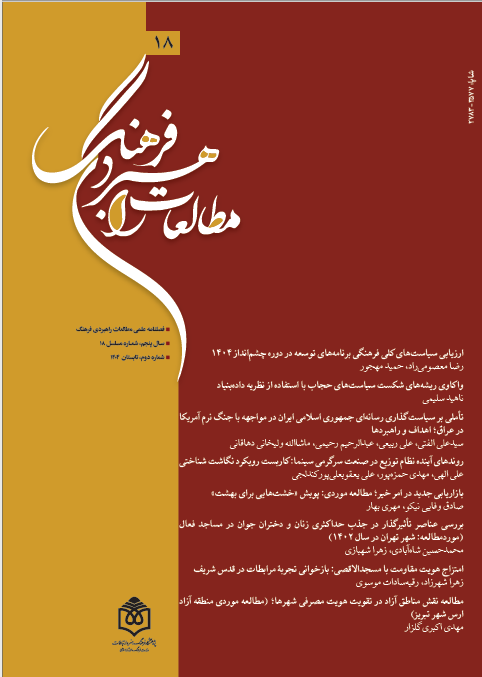
فصلنامه علمی مطالعات راهبردی فرهنگ

فصلنامه علمی مطالعات راهبردی فرهنگ

بررسی عناصر تأثیرگذار در جذب حداکثری زنان و دختران جوان در مساجد فعال شهر تهران

نوع مقاله : مقاله پژوهشی

نویسندگان
1 دانش‌آموخته دکترای فرهنگ و ارتباطات دانشگاه باقرالعلوم(ع)، پژوهشگر پژوهشکده شهید صدر، تهران، ایران. (نویسنده مسئول)
2 دانشجوی کارشناسی ارشد مطالعات فرهنگی و رسانه، دانشگاه جامع امام حسین علیه‌السلام، تهران، ایران.
چکیده
یکی از مهم‌ترین عوامل در رونق مساجد حضور بانوان است که امروزه به دلایل گوناگون کم‌رنگ شده است. هدف این پژوهش آن است که نشان دهد مساجدی که در این زمانه توانسته‌اند زنان و دختران جوان را جذب کنند، چه ویژگی‌هایی داشته‌اند تا از این رهگذر بتواند این عناصر را به سایر مساجد پیشنهاد دهد. این پژوهش از نوع کیفی است و سعی کرده به روش تحلیل مضمون از مصاحبه‌های نیمه‌ساختاریافته از مسئولین مساجد، عناصر مهم جذب زنان و دختران جوان به مسجد را به دست آورد. نتایج نشان داد که عناصر تأثیرگذار در جذب حداکثری زنان و دختران جوان در مساجد فعال شهر تهران در سه دسته فراگیر فعالیت‌های فرهنگی (حضور در فعالیت‌های قرآن محور، مشارکت‌های فرهنگی و هنریو...)، اجتماعی (حضور در برنامه‌های مشاوره و خانواده محور، تعاملات اجتماعی و ارتباط محلیو...) و سیاسی (جلسات سخنرانی و هم‌اندیشی، حلقه‌های مباحثه و حضور در جلسات عقیدتی و...) قابل تقسیم است.
کلیدواژه‌ها

عنوان مقاله English

Investigating the influential factors in the maximum attraction of young women and girls in active mosques in Tehran

نویسندگان English

محمد حسین شاه آبادی 1
Zahra Shahbazi 2
1 Ph.D. student of Culture and Communication, Bagheral Uloom University (AS), Researcher at Shahid Sadr Research Institute
2 Master’s student of cultural and media studies, Imam Hossein University.
چکیده English

Extended Abstract
Introducion: Since the establishment of the Islamic government, women have constituted half of society and have played significant roles in the continuity of Islam. Figures such as Hazrat Khadija and Hazrat Zahra (peace be upon them) have served as exemplary Muslim women, contributing to the growth and elevation of Islam. Women have always held a special place in public and religious participation, and their presence in mosques, as important centers of religious, social, and cultural activities, has been evident since ancient times. Women’s religious participation includes attending congregational prayers, religious gatherings, charity activities, and studying religious texts. Today, examining the factors that attract women and girls to mosques, especially in active mosques in Tehran in the year 1402 (2023), is of great importance. This research seeks to identify these factors and also explore the extent of women’s and girls’ presence and the programs specifically designed for them in Tehran’s mosques.
Methods: This research is applied in terms of purpose and qualitative thematic analysis in terms of methodology, with data collected through semi-structured interviews with 12 members of the statistical population, specifically female unit officials or commanders of active Basij mosques in Tehran. Sampling was purposeful and continued until theoretical saturation was achieved, meaning interviews were conducted until repetitive findings emerged. Data analysis was performed using thematic analysis, particularly the thematic network approach, where basic themes were extracted from the text, categorized, and transformed into organizing and global themes to create network maps. This method serves as an analytical tool for interpreting the text and presenting the results in a clear and comprehensible manner.
Results: This study was designed to investigate the presence, participation, and activities of women in active mosques in Tehran and to identify the factors that attract young women and girls to these mosques. The data revealed that women’s activities in mosques can be categorized into three broad areas: cultural, social, and political, including activities such as Quranic classes, counseling programs, and ideological sessions. The results emphasized that these activities not only align with the sacred environment of mosques but also adhere to religious recommendations, contributing to the spiritual and social growth of women. The study highlighted the importance of women as social activists and nurturers of a devout generation, presenting mosques as suitable spaces for attracting and engaging young women and girls. It is hoped that this research, by providing a scientific understanding of women’s participation, will offer strategies to enhance their presence in mosques and cultural activities.
Discussion: According to the research findings, women, young girls, and female teenagers participate in a variety of activities at mosques, including Quranic classes, educational and academic enhancement workshops, art training, circles of knowledge and religious rulings, religious gatherings, joint mother-daughter programs, parenting skills workshops, sports classes, and recreational and pilgrimage trips. Some mosques collaborate with external organizations and utilize their facilities to host diverse educational programs. The engagement of women in mosques is facilitated through effective communication by mosque officials, attention to hygiene and well-maintained spaces, and active online presence. Active mosques create an attractive and participatory environment, particularly by assigning responsibilities to young people and teenagers, successfully attracting them to mosque activities.

کلیدواژه‌ها English

Thematic analysis
young girls
women
attraction elements
mosque
participation
منابع و مأخذ
جعفرزاده، محمدحسن (۱۳۹۳). مسجد طراز اسلامی از منظر امام خمینی (ره) و رهبر معظم انقلاب اسلامی، تهران: دفتر مطالعات و پژوهش‌های مرکز رسیدگی به امور مساجد.
جوادی‌آملی، عبدالله (1378). زن‌ در آئینه‌ جلال‌ و جمال، قم: دارالهدی.
حسن‌زاده‌آملی، حسن (1365). نصوص الحکم برفصوص الحکم، تهران: مرکز نشر فرهنگی رجا.
حمیری، عبدالله‌بن‌جعفر (۱۴۱۳). قرب الاسناد، قم: مؤسسه آل البیت (علیه‌السلام).
خوش‌منش، ابوالفضل (1389). بررسی تحلیلی و تطبیقی مفهوم زن و زادن در سیاق سوره‌های قرآن، پژوهشنامه علوم و معارف قرآن کریم، 1(62)، 25-54.
دهخدا، علی‌اکبر (1373). لغت‌نامه، تهران: دانشگاه تهران.
رحمانیان‌کوشکی، مهدی، کوشکی جهرمی، سعید، دائمی جهرمی، سعید و احسان شعبان‌پور جهرمی (۱۳۹۷). واکاوی و تبیین سازه‌های تأثیرگذار بر جلب مشارکت نوجوانان به بسیج مساجد موردمطالعه: پایگاه بسیج مسجد امام حسین (ع) شهرستان جهرم، رهیافت فرهنگ دینی، 1(3)، 146-165.
رضایی‌تبار، رضا (۱۳۹۱). الگوی تعاملی و توانمندسازی از طریق مشارکت‌های اجتماعی در کمیته امداد امام خمینی (ره) با رویکرد مسجدمحوری. مدیریت اسلامی، 20(2)، 147-173.
شبیر، محمدعلی و امیرفرهنگ فرهنگ مهر (1379). کتاب ماه علوم اجتماعی، زن در نگاه فمینیسم و علم سیاست، 31، 32-34.
شیخ‌حرعاملى، محمدبن‌حسن (1409). وسائل الشیعه، قم: مؤسسة آل البیت علیهم السلام‏.
ضرابی، عبدالرضا (۱۳۸۴). کارکرد مسجد، تهران: نشر رسانه.
فرخی، میثم (۱۳۹۷). میزان و چگونگی مشارکت زنان در مساجد (موردمطالعه: مساجد شهرستان پاکدشت)، زن و جامعه،  9(4)، 217-233.
گندمکار، علی‌اکبر (۱۳۸۵). بررسی تاریخی و فقهی حضور زن در مسجد در صدر اسلام. فروغ مسجد، 4، 157-181.
مجلسی، محمدباقر (۱۴۰۳). بحار الأنوار (ط- بیروت)، بیروت: دار إحیاء التراث العربی‏.
مطهری، مرتضی (۱۳۸۹). مجموعه آثار، تهران: صدرا.
هاشمی، ریحانه  و رسول جعفریان (۱۳۹۳). سیر تحولات تاریخی حضور زنان در مساجد و اماکن اسلامی و تأثیر آن بر معماری مساجد، شیعه‌شناسی، 12(45)، 177-210.
هاشمیان‌فر، سیدعلی؛ شایگان، فریبا و مصطفی سعیدی (۱۳۹۴). بررسی مشارکت جوانان در مساجد با تأکید بر خانواده، شیعه‌شناسی، 13(50)، 33-70.
 
Farsnews. (2025). Fars News Agency. Retrieved January 9, 2025, from https://farsnews.ir/Culture/1320136200000737694
Shabestan. (2025(. Shabestan News. Retrieved January 9, 2025, from https://www.shabestan.news/news/374517
Dehkhoda, A. A. (1994). Lughatnameh. Tehran: University of Tehran.
Farrokhi, M. (2018). The level and manner of women’s participation in mosques: A case study of mosques in Pakdasht. Woman and Society, 217–233. [In Persian]
Farsnews. (2025). Ways to attract youth to mosques and congregational prayers. Fars News Agency. Retrieved January 9, 2025, from https://farsnews.ir/Culture/1320136200000737694 [In Persian]
Gandomkar, A. A. (2006). A historical and jurisprudential study of women’s presence in mosques in early Islam. Forough-e Masjid, 157–181. [In Persian]
Hasanzadeh Amoli, H. (1986). Nusus al-Hikam bi Fusus al-Hikam. Tehran: Rasa Cultural Publishing Center. [In Persian]
Hashemi, R. (2014). Historical evolution of women’s presence in mosques and Islamic places and its impact on mosque architecture. Shiite Studies, 177–210. [In Persian]
Hashemian Far, S. A. (2015). A study of youth participation in mosques with an emphasis on family. Shiite Studies, 33–70. [In Persian]
Himyari, A. bin J. (1992). Qurb al-Isnad. Qom: Aal al-Bayt Institute (AS). [In Persian]
Jafarzadeh, M. H. (2014). The Islamic model mosque from the perspective of Imam Khomeini (RA) and the Supreme Leader of the Islamic Revolution. Tehran: Office of Studies and Research of the Mosque Affairs Center. [In Persian]
Javadi Amoli, A. (1999). Woman in the mirror of majesty and beauty. Qom: Dar al-Hadi. [In Persian]
Khamenei, S. A. (2010). Message to the 19th General Assembly of Prayer. Retrieved from the Office of Preservation and Publication of the Works of Ayatollah Khamenei: https://farsi.khamenei.ir/message-content?id=10253 [In Persian]
Khoshmanesh, A. (2010). An analytical and comparative study of the concept of woman and childbirth in the context of Quranic chapters. Journal of Quranic Sciences and Knowledge, 6, 25–54. [In Persian]
Majlisi, M. B. (1982). Bihar al-Anwar (Beirut edition). Beirut: Dar Ihya al-Turath al-Arabi. [In Persian]
Motahhari, M. (2010). Collected works. Tehran: Sadra. [In Persian]
Rahmanian Koshki, M. (2018). Analysis and explanation of influential factors on attracting adolescents to mosque Basij: A case study of Imam Hussein Mosque Basij Base in Jahrom. Religious Culture Approach, 146–165. [In Persian]
Rezaei Tabar, R. (2012). Interactive model and empowerment through social participation in Imam Khomeini Relief Committee with a mosque-centered approach. Islamic Management, 147–173. [In Persian]
Shabestan. (2025). How to make mosques attractive for youth participation? Shabestan News. Retrieved January 9, 2025, from https://www.shabestan.news/news/374517 [In Persian]
Sheikh Hurr al-Amili, M. bin H. (1988). Wasail al-Shia. Qom: Aal al-Bayt Institute (AS). [In Persian]
Shobair, M. A. (2000, May). Woman in the eyes of feminism and political science. Book of the Month: Social Sciences, 32, 32–34. [In Persian]
Zarabi, A. (2005). The function of the mosque. Tehran: Media Publications. [In Persian]