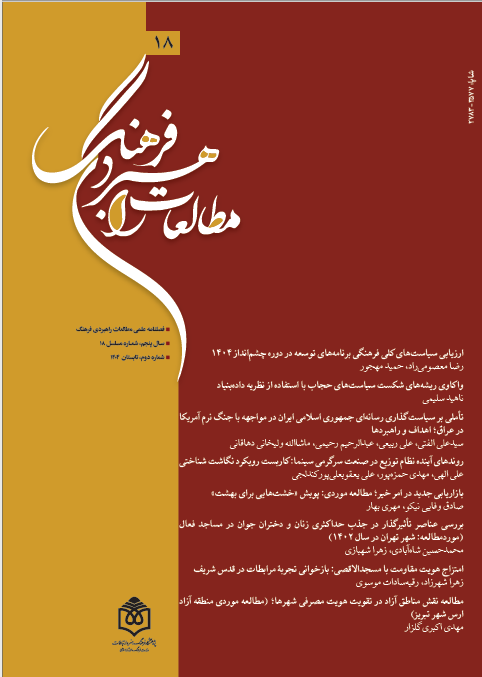
فصلنامه علمی مطالعات راهبردی فرهنگ

فصلنامه علمی مطالعات راهبردی فرهنگ

ارزیابی سیاست های کلی فرهنگی برنامه‌های توسعه در دوره چشم انداز 1404

نوع مقاله : مقاله پژوهشی

نویسندگان
1 استادیار گروه علوم اجتماعی دانشکده ادبیات و علوم انسانی دانشگاه گیلان، رشت، ایران. (نویسنده مسئول)
2 پژوهشگر دبیرخانه شورای عالی انقلاب فرهنگی
چکیده
یکی از مهم‌ترین ضعف‌های قوانین برنامه‌های پنج‌ساله توسعه، عدم تحقق سیاست‌های کلی فرادست این برنامه‌ها در اغلب بخش‌ها به‌ویژه در بخش فرهنگ است. میزان انطباق بین این دو سطح از سیاست‌گذاری و برنامه‌ریزی را می‌توان در مفاد، مختصات و منطوق سیاست‌های کلی جستجو نمود. هدفی که این مطالعه در پی بررسی آن بوده، ارزیابی سیاست‌های کلی برنامه‌های توسعه در بخش فرهنگ است. این مطالعه به روش ترکیبی شامل مطالعه کیفی با تکنیک تحلیل مضمونی سیاست‌ها و استخراج مقولات اساسی آنها و سپس مطالعه کمی به روش مصاحبه ساختاریافته با 14 نفر از کارشناسان حوزه برنامه‌ریزی فرهنگی که به صورت هدفدار انتخاب شدند، صورت پذیرفته است. نتایج حاصله نشان داد که سیاست‌های کلی برنامه پنجم بالاترین نمره ارزیابی و سیاست‌های کلی برنامه چهارم در رتبه دوم و سیاست‌های کلی برنامه ششم در جایگاه سوم قرارگرفته و هر سه مجموعه دارای نمره بالاتر از متوسط و در حد مطلوب ارزیابی‌ شده است. همچنین در بین مؤلفه‌های مختلف، انطباق با مبانی فرادستی و قانون اساسی بالاترین نمره و زمانمندی و انطباق با منابع بودجه‌ای در کمترین حد انطباق ارزیابی شده است. به علاوه سیاست‌های کلی برنامه چهارم دارای کمترین و سیاست‌های کلی برنامه ششم دارای بیشتری اثربخشی در اجرا بوده است. در خصوص اثربخشی و نفوذ سیاست‌های کلی در مرحله تقنین، بالاترین اثربخشی از آن برنامه پنجم و کمترین اثربخشی مربوط به برنامه چهارم ارزیابی شده است.
کلیدواژه‌ها

عنوان مقاله English

Evaluation of macro cultural policies of development programs in the 1404 vision period

نویسندگان English

Reza Masoumirad 1
Hamid Mahjour 2
1 Assistant Professor, Faculty of Literature and Humanities, University of Guilan, Rasht, Iran. (Corresponding Author)
2 researcher at the Secretariat of the Supreme Council of Cultural Revolution
چکیده English

Extended Abstract
Any type of policy and macro planning in the geographical territory of a country or nation-state must necessarily pass through official and competent channels of policy and legislation. Regarding the formulation of development plans, this means that the legislator should formulate medium and short-term plans inspired by the ideal foundations of development which are often laid out in documents such as the constitution, macro-strategic documents such as visions or general policies.
The effectiveness of political and legislative documents and texts of development itself requires compliance with the rules and criteria that must be followed in formulating general policies and then the program.
The necessary and important thing which, according to most of the evaluations, has not been observed in the formulation of the general policies of the development program, and has caused weakness and deficiency in the realization of the general policies and the compliance of the subordinate laws with these principles.
One of the most important weaknesses of the laws of the five-year development plans is the failure to implement the general policies of these plans in all sectors, especially the culture sector. The purpose of this study is to focus on cultural policies.
Because cultural policies, more than other policies, represent the ruling spirit of the fundamentals of the Islamic revolution and the constitution. Therefore, this study has evaluated and analyzed the general policies of development programs in the culture sector.
For this purpose, by examining the content of cultural policies of development programs in the 1404 vision period and evaluating the contents of these policies from the perspective of policy-making criteria, it deals with the harms, deficiencies and weaknesses that are hidden in these policies and have caused problems in their implementation.
Two methods are used to evaluate and diagnose general policies in the culture sector. First, by qualitative and thematic analysis of the content of the general policies, axes, themes and basic categories were extracted in order to track its spread and implementation in the texts of development program laws. Then, by referring to experts and key informants in cultural affairs, the extent of compliance with the rules and criteria required for political rulings was examined.
The number of experts who were consulted in two stages (validation of criteria and rules and then evaluation and pathology of general policies in the culture sector) were 14 people and they were targeted and among the experts of the program and budget organization and cultural institutions including the Ministry of culture - The Secretariat of the Supreme Council of the Cultural Revolution and a number of cultural studies researchers and students of cultural policy and management were selected at the doctorate and master levels.
The results of the study showed that the general policies of development programs in the culture sector during the vision period suffer from the following damages and problems, and it is suggested to avoid them in formulating future general policies.
The general policies of the 4th plan have the least effectiveness and influence in the implementation, and the general policies of the 6th plan have been evaluated to be more effective in the implementation. Of course, in total, the average effectiveness of each set of cultural policies of the development programs is below the number 4 and has been evaluated at a medium and good level.
Regarding the effectiveness and influence of the general policies of the development programs in the legislative phase, the highest effectiveness of the fifth program and the lowest effectiveness of the fourth program have been evaluated.
Also, according to the results, the general policies of the 5th program have the highest evaluation score, the general policies of the 4th program are in the second place, and the general policies of the 6th program are in the third place. Of course, all three collections have a higher than average score and have been evaluated at the optimal level. Also, among the various components of the policy evaluation index, the criterion of compliance with the fundamental principles and the constitution has the highest score, and timeliness and compliance with budgetary resources have been evaluated at the lowest level of compliance.
In other words, the general policies of the program in terms of the ability to realize the time frame of the policy implementation, attention to the budget and financial and institutional facilities necessary for the implementation of the policy, compatibility with global experiences, specifying the trustee of the policy implementation in order to monitor their implementation are weak and lacking in evaluation.
Some of the provisions and clauses of the general policies are general, lack of clarity and therefore interpretable, which is necessary to avoid this weakness in formulating future policies.
Some of the general cultural policies have the nature of justification, the concern of maintaining the existing situation and order, and are dependent on the path taken, and therefore lack the necessary courage to reform and improve cultural structures.
Weakness in relying on consensus and collective, expert, scientific and managerial wisdom, and as a result, the lack of the necessary opportunity to motivate participation in the society, is one of the assessed damages of the general policies of the development programs in the culture sector, which is necessary in the process of drafting Future policies should be used from key studies of the culture sector, including experts, researchers and specialists.

کلیدواژه‌ها English

Macro policies
1404 vision of Iran
Cultural policies
development plans
Culture sector
 منابع و مأخذ
آقاسی‌زاده، فتح اله و سعید غلامی نتاج امیری (1399). هفتاد سال برنامه‌ریزی در ایران، آسیب‌ها و چالش‌ها، سازمان برنامه‌وبودجه، مرکز پژوهش‌های توسعه و آینده‌نگری.
اسماعیلی، محسن و مصطفی منصوریان (1391). درآمدی بر نقش مجلس شورای اسلامی در حسن اجرای سیاست‌های کلی نظام، فصلنامه دانش حقوق عمومی، 1(2)، 1-22.
 قابل‌دسترس در: https://mag.shora-rc.ir/article_8.html.
اشتریان، کیومرث (1391). مقدمه بر سیاست‌گذاری فرهنگی، انتشارات جامعه شناسان.
اکبری، محمدعلی. (1381). تجربیاتی از برنامه‌ریزی فرهنگی در ایران 1320-1357، شورای فرهنگ عمومی، -(33)، 0-0. قابل‌دسترس در: SID. https://sid.ir/paper/506357/fa
الوانی، سید مهدی و فتاح شریف‌زاده،(1381). فرایند خط‌مشی گذاری عمومی، چاپ دوم، تهران، دانشگاه علامه طباطبایی.
امیر ارجمند، اردشیر (1381). کاوش در برخی زوایا؛ سیاست‌های کلی نظام در پرتو اصل حاکمیت قانون و جمهوریت. فصلنامه علمی راهبرد، 10(4)، 70-90.
dor/20.1001.1.10283102.1381.10.4.3.8
ایوبی، حجت‌الله (1389). سیاست‌گذاری فرهنگی در فرانسه، دولت و هنر، چاپ دوم، انتشارات سمت.
راسخ، محمد (1387). حق و مصلحت: مقالاتی در فلسفه حقوق، فلسفه حق و فلسفه ارزش، چاپ سوم، انتشارات طرح نو.
بیرو، آلن (1375). فرهنگ علوم اجتماعی، ترجمۀ باقر ساروخانی، چاپ سوم، تهران، انتشارات کیهان.
پارسونز، واین (1399). مبانی سیاست‌گذاری عمومی و تحلیل سیاست‌ها، ترجمۀ دکتر حمیدرضا ملک محمدی، جلد اول، چاپ دوم، پژوهشکده مطالعات راهبردی.
توفیق، فیروز (1385). برنامه‌ریزی در ایران و چشم‌انداز آینده آن، تهران: انتشارات علمی و فرهنگی.
دهخدا، علی‏اکبر (1373). لغت‏نامه، چاپ اول از دوره جدید، تهران: مؤسسه انتشارات و چاپ دانشگاه تهران.
دبیرخانه مجمع تشخیص مصلحت نظام (1386). گزارش کمیسیون تلفیق و هماهنگی.
رویر، لوسین شارل (مشاور مدیریت) با همکاری حمید نقش تبریزی؛ (1973). توصیه‌هایی در باب مفهوم، فلسفه و سازمان به‌منظور انجام اصلاحات اساسی، سازمان برنامه‌وبودجه، تهران، ایران.
سیروس، داوود، صبوری‌نیا، میرزاعلی و جبرئیل مرزی‌علمداری (1390). چالش‌های قانون‌گرایی: اعتبار و پایایی قانون. پژوهش‌های حقوقی،10(19)، 205-216. قابل‌دسترسی در: https://jlr.sdil.ac.ir/article_39065.html
صالحی امیری، سیدرضا، امیر عظیمی دولت‌آبادی (1387). مبانی سیاست‌گذاری و برنامه‏ریزی فرهنگی، مرکز تحقیقات استراتژیک.
صالحی امیری، سیدرضا (1390). الزامات برنامه‌ریزی مطلوب فرهنگی، برگ فرهنگ، (23)، 88-97. SID. https://sid.ir/paper/94141/fa
طحان نظیف، هادی، علی احمدی و مرتضی حاجی علی خمسه (1403). الزامات سیاست‌های کلی نظام، از تدوین و ابلاغ سیاست‌ها تا نظارت بر حسن اجرای آن، ویژه‌نامه نظارت بر حسن اجرای سیاست‌های کلی نظام، پایگاه اطلاع‌رسانی مصلحت،
 https://maslahat.ir/files/fa/news/1403/5/24/4702_931.pdf
عطار، سعید و علی خواجه نایینی (1394). بررسی و تحلیل عوامل مؤثر بر ناکارآمدی نظام سیاست‌گذاری در ایران. سیاست‌گذاری عمومی، 1(1)، 1-20. Doi: 10.22059/ppolicy.2015.57149
علوی منش، سیدمحسن، ایمان تهرانی و مهدی رزم آهنگ (1396)، بررسی انطباق قانون برنامه ششم توسعه با سیاست‌های کلی برنامه ششم و اقتصاد مقاومتی، مرکز پژوهش‌های مجلس شورای اسلامی، دفتر مطالعات اقتصادی، گزارش‌های موضوعی، شماره 15378. قابل‌دسترسی در: https://rc.majlis.ir/fa/report/show/1018146
غلامی، علی و علی بهادری جهرمی (1392). مفهوم، ماهیت و نظارت بر اجرای سیاست‌های کلی نظام. فصلنامه دانش حقوق عمومی، 2(3)، 51-72. قابل‌دسترسی در: https://mag.shora-rc.ir/article_17.html
لطیفی، میثم و مجتبی کمیلی فرد (1397). شناسایی موانع عملیاتی شدن سیاست‌های کلی نظام اداری ابلاغی مقام معظم رهبری مدظله‌العالی.‌مطالعات راهبردی بسیج21(78), 73-100.. Dor: 20.1001.1.1735501.1397.21.78.3.8
مجلس شورای اسلامی (1369). صورت مشروح مذاکرات شورای بازنگری قانون اساسی جمهوری اسلامی ایران، اداره کل امور فرهنگی و روابط عمومی مجلس شورای اسلامی، تیر 1369، جلد دوم، جلسه هفدهم ـ ص 642.
معصومی‌راد، رضا (1389). مجمع تشخیص مصلحت و تجربه تدوین سیاست‌های کلی (مبانی، عملکرد و دستاوردها)، (گزارش پژوهشی)، مرکز تحقیقات استراتژیک، معاونت پژوهش‌های اقتصادی.
هاشمی رفسنجانی، اکبر (1381). مصاحبه علمی «راهبرد» با آیت‌الله هاشمی رفسنجانی ریاست مجمع تشخیص مصلحت نظام؛ نقادی نظر ورزی‌ها درباره مجمع تشخیص مصلحت. فصلنامه علمی راهبرد، 10(4)، . Dor: 20.1001.1.10283102.1381.10.4.1.6
اسناد قانونی و مجموعه سیاست‌ها:
سند چشم‌انداز 1404. قابل‌دسترسی در:
سیاست‌های کلی نظام قانون‌گذاری، قابل‌دسترسی در:
 https://farsi.khamenei.ir/news-content?id=43578
سیاست‌های کلی برنامه چهارم، قابل‌دسترسی در:
 https://farsi.khamenei.ir/news-content?id=37764
سیاست‌های کلی برنامه پنجم، قابل‌دسترسی در:
 https://farsi.khamenei.ir/news-content?id=5389
سیاست‌های کلی برنامه ششم، قابل‌دسترسی در:
 https://farsi.khamenei.ir/news-content?id=30128
قانون برنامه پنج‌ساله چهارم توسعه، قابل‌دسترسی در:
https://rc.majlis.ir/fa/law/print_version/94202
قانون برنامه‌وبودجه، مجلس شورای ملی، 1352، قابل‌دسترسی در:
https://rc.majlis.ir/fa/law/show/96917
 
Aghasizadeh, Fathullah and Saeed Gholami Netaj Amiri (2019). Seventy Years of Planning in Iran, Damages and Challenges, Program and Budget Organization, Development and Foresight Research Center. [In Persian]
Akbari, Mohammad Ali. (1381). Experiences of cultural planning in Iran 1357-1320. General Culture Council, -(33), 0-0.   Available at: SID. https://sid.ir/paper/506357/fa . [In Persian]
Alavi Manesh, Seyyed Mohsen, Iman Tehrani, Mehdi Razm Ange (2016), study of compliance of the law of the 6th development plan with the general policies of the 6th plan and resistance economy, Research Center of the Islamic Council, Office of Economic Studies, Thematic Reports, No. 15378. Available at:  https://rc.majlis.ir/fa/report/show/1018146. [In Persian]
Alwani, Seyyed Mehdi and Sharifzadeh, Fattah, (2008). Public policy process, Tehran, Allameh Tabatabai University, second edition. [In Persian]
  Amirarjamand, Ardeshir. (2002). exploring some angles; The general policies of the system in the light of the rule of law and democracy. Strategic Scientific Quarterly, 10(4), -. Dor/20.1001.1.10283102.1381.10.4.3.8   . [In Persian]
Ashtarian, Kiyomarth, (2013). Introduction to cultural policy, Sociologists Publications. [In Persian]
Attar, Saeed, and Khajeh Nayini, Ali. (2014). Investigating and analyzing the factors affecting the inefficiency of the policy making system in Iran. Public Policy, 1(1), 1-20. Doi: 10.22059/ppolicy.2015.57149. [In Persian]
Ayubi, Hojatullah, (2010). Cultural Policy in France, Government and Art, Samt Publications. Second edition. [In Persian]
Birou, Alain (1996). Practical Vocabulary in Social Sciences, translated by Bagher Saroukhani, third edition, Tehran, Kayhan Publications. [In Persian]
Dehkhoda, Ali Akbar (1994). dictionary, first edition of the new period, Tehran, Tehran University Publishing and Printing Institute. [In Persian]
Esmaili, Mohsen and Mansoorian, Mustafa, (2013). an introduction to the role of the Islamic Council in the implementation of the general policies of the system, Knowledge of Public Law Quarterly, 1(2), 1-22. Available at: https://mag.shora-rc.ir/article_8.html. [In Persian]
Gholami, Ali and Bahadri Jahormi, Ali. (2012). The concept, nature and supervision of the implementation of the general policies of the system. Knowledge of Public Law Quarterly, 2(3), 51-72. Accessible at:   https://mag.shora-rc.ir/article_17.html. [In Persian]
Hashemi Rafsanjani, Akbar. (2002). "Rahbard" scientific interview with Ayatollah Hashemi Rafsanjani, head of the Expediency Council; Criticism of reviews about the Expediency Council. Strategic scientific quarterly. 10(4), -. Dor/ 20.1001.1.10283102.1381.10.4.1.6.
James, W .(1943). "Essay on Faith and Morals ".london: Longmans Green and Co.
Latifi, Maitham and Kamili Fard, Mojtabi. (2017). Identifying the obstacles to the operationalization of the general policies of the administrative system announced by the Supreme Leader Madzaleh Al-Ali. Basij strategic studies 21(78), 73-100. Dor/ 20.1001.1.1735501.1397.21.78.3.8. [In Persian]
Masoumirad, Reza (2010), The Expediency Council and General Policy Formulation Experience (Basics, Performance and Achievements), (Research Report), Strategic Research Center, Economic Research Deputy. [In Persian]
Parsons; Wayne (2019). Public Policy: An Introduction to the Theory and Practice of Policy Analysis, translated by Dr. Hamidreza Malek Mohammadi, first volume, second edition, Strategic Studies Research Institute. [In Persian]
Rasakh, Mohammad, (2008). Right and Expediency: Essays in Philosophy of Law, Philosophy of Right and Philosophy of Value, Tarh-e-no Publications. Third edition. [In Persian]
Royer, Lucien Charles (management consultant) in collaboration with Hamid Naqsh Tabrizi; (1973). Recommendations on concept, philosophy and organization in order to carry out fundamental reforms, Program and Budget Organization, Tehran, Iran. [In Persian]
Salehi Amiri, Seyedreza, Amir Azimi Dolatabadi (2007) Basics of policy making and cultural planning, Strategic Research Center. [In Persian] 
Salehi Amiri, Seyedreza. (2011). Requirements for optimal cultural planning. Barg-e-Farhang magazine. Available at: SID. https://sid.ir/paper/94141/fa[In Persian] 
Secretariat of The Expediency Council, (2006), report of the Consolidation and Coordination Commission. [In Persian]
Siros, Davoud, Saburinia, Mirza Ali, & Marzi Alamdari, Gabriel. (1390). Law Approach Challenges: Law Validity and Law Reliability , Legal Research, 10(19), 205-216 . Available at: https://jlr.sdil.ac.ir/article_39065.html . [In Persian]
Tahan Nazif, Hadi, Ali Ahmadi and Morteza Haji Ali Khamsa, (1403), the requirements of the general policies of the system, from the formulation and communication of policies to the monitoring of their good implementation, special issue of monitoring the good implementation of the general policies of the system, Available at:  https://maslahat.ir/files/fa/news/1403/5/24/4702_931.pdf  . [In Persian]
Tawfiq, Firouz, (2016). Planning in Iran and its future prospects, Tehran: Scientific and Cultural Publications. [In Persian]
The Islamic Council (1980). the annotated form of the deliberations of the Council for Revision of the Constitution of the Islamic Republic of Iran, the General Department of Cultural Affairs and Public Relations of the Islamic Council, July 1369, Volume II, 17th Session - p.642. [In Persian]
The General policies of the legislative system. Available at: https://farsi.khamenei.ir/news-content?id=43578. [In Persian]
The general policies of the fourth program, . Available at: https://farsi.khamenei.ir/news-content?id=37764. [In Persian]
The general policies of the fifth program, . Available at: https://farsi.khamenei.ir/news-content?id=5389. [In Persian]
The general policies of the sixth program, . Available at: https://farsi.khamenei.ir/news-content?id=30128. [In Persian]
The Law of the fourth five-year development plan. Available at: https://rc.majlis.ir/fa/law/print_version/94202. [In Persian]
The law of Program and Budget, National Assembly, 1973. Available at: https://rc.majlis.ir/fa/law/show/96917. [In Persian]
Vision Document 1404 of Iran. Available at: https://farsi.khamenei.ir/message-content?id=9034.