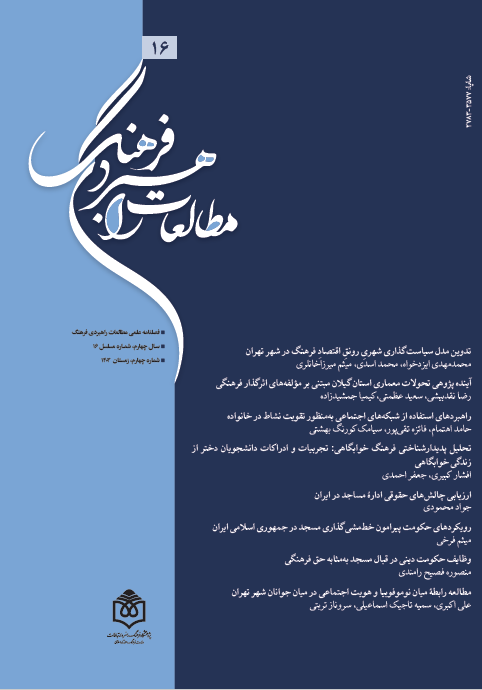
فصلنامه علمی مطالعات راهبردی فرهنگ

فصلنامه علمی مطالعات راهبردی فرهنگ

ارزیابی چالش‌های حقوقی ادارۀ مساجد در ایران

نوع مقاله : مقاله پژوهشی

نویسنده
استادیار گروه حقوق، دانشکده ادبیات و علوم انسانی، دانشگاه شهرکرد، شهرکرد، ایران. Mahmoudi.javad@Sku.ac.ir 0000-0001-7254-8049
چکیده
مساجد، همواره به‌مثابۀ مراکز اصلی تجمعات دینی مسلمانان و بخشی از هویت زیستی آنان، مطرح بوده­اند. باوجود پژوهش­­های فراوان دراین‌باره، تحلیل حقوقی چالش­های مساجد، آن‌طور که بایدوشاید صورت نگرفته است. این تحلیل می­تواند ضمن بیان هویت حقوقی مساجد، مسائل عملی مرتبط با کارکرد عملی و نیز نظارت بر آن­ها را مورد ارزیابی و آسیب­شناسی، قرار دهد. در پژوهش پیش رو، ضمن بازخوانی ساختار اجرایی و درونی مساجد، شیوه و سطح نظارت بیرونی بر آن­ها از سوی نهادهای دولتی و حکومتی، مورد ارزیابی انتقادی، قرار می­گیرد. این پژوهش به شیوه کتابخانه­ای و با تکیه‌بر اسناد حقوقی داخلی و خارجی و نیز رویه­های قضایی مربوطه می­کوشد که در پرتو مطالعه توصیفی- تحلیلی دراین‌باره، افق­های روشنی از چالش­های مساجد را در کنار راهکارهای عملی، ارائه دهد. از مجموع تحولات حقوقی دراین‌باره، چنین برمی‌آید که مساجد از مراکز سنتی و عموماً تحت مدیریت مردم و مراجع و جوامع مردمی به مؤسسه‌های مشمول نظارت دولت و حکومت، تبدیل شده‌اند. ازاین‌رو، در فرآیند تأسیس مساجد و تعیین اعضای هیئت‌امنا، خادم، امام جماعت و سایر متولیان درونی و نیز در روند نظارت بر کارکردهای دینی- اجتماعی آن­ها نقش حکومت و دولت به‌تدریج، افزایش‌یافته و میان این سطح از مدیریت حکومتی و دولتی بر مساجد و روند دین­گریزی جوانان و تضعیف نقش اجتماعی مساجد، رابطه معناداری برقرار شده است؛ بنابراین تغییر در نوع رابطه مساجد با حکومت و دولت می­تواند بخشی از هویت و نقش اجتماعی آن­ها را بازآفرینی کند.
کلیدواژه‌ها

عنوان مقاله English

Evaluating the legal Challenges of Management of the Mosques in Iran

نویسنده English

Javad Mahmoudi
Assistant professor of Public Law, Faculty of Literature and Human science, Shahrekord University, Shahrekord, Iran. Mahmoudi.javad@Sku.ac.ir 0000-0001-7254-8049
چکیده English

Detailed abstract
Mosques have always been considered as the main centers of religious gatherings of Muslims and a part of their biological identity. Despite the many researches in this regard, the legal analysis of the challenges of mosques has not been done as it should and maybe not.
Statement of the research problem
In terms of stating the problem, it is worth saying that mosques have been very important as an influential reference on the intellectual direction of the society as well as a powerful player in the political and social arenas in the previous many decades. In the upcoming research, we will focus on how their management challenges are; With the explanation that the internal and external administration of mosques and the type and level of government supervision over them are studied in the light of the laws and regulations and approvals of official institutions as well as some opinions and current judicial processes. According to the author, the way mosques are managed has a direct effect on social credibility and, accordingly, the level of public approval of them. In addition to that, these questions are raised that which of the governmental institutions are influential in which areas of the internal or external management of mosques? What are the practical challenges of this style of interaction and management? What have been the legal developments in this regard and how are those developments evaluated from the perspective of freedom of religion in the upstream documents?
Research background
Ongaro and Tantardini in "Religion and Public Administration" (2023) addressed the general issues regarding the interaction of religious institutions in America with the official administration of that country. Sedaghati and Faqih Habibi (2021) in "Administrative organization of the mosque and cement standards in Iran's legal system: contrast or symmetry?" have raised the possibility of using foundation people's organizations in mosques. Abun-Noor (2018), in a series of articles entitled "How should mosque administration be?", has stated the administrative standards and internal management of mosques in the light of the requirements of traditional jurisprudence. Keyvan Sadaghati (2013) in "The Place of the Mosque in the Legal System of Iran" tried to clarify the legal identity of the mosque by relying on some judicial opinions. Javan Arasteh (2014) in "Mosque and its management: issues and challenges", has expressed appropriate models for regulating relations between mosques and official institutions. It is noted that none of the aforementioned researches focused on the legal developments related to the internal and external management of mosques in Iran, and therefore, the present research has no background; Because in terms of the major achievements of the above-mentioned researches, he has critically evaluated them in terms of their composition and function by stating the authorities and related governmental and governmental institutions. 
Research method
The upcoming research is in the form of a library study through a descriptive and analytical review of the legal rules governing mosques, including international documents, laws, regulations, judicial procedures and Some legal opinions have been implemented.
 In addition to expressing the legal identity of mosques, this analysis can evaluate and diagnose practical issues related to their practical function and their supervision. In the upcoming research, while re-reading the executive and internal structure of mosques, the method and level of external supervision on them by government institutions will be critically evaluated. This research, using a library method and relying on domestic and foreign legal documents as well as relevant judicial procedures, tries to find clear horizons of the challenges of mosques in the light of descriptive-analytical study in this regard, along with providing practical solutions. From the total of legal developments in this regard, it appears that mosques have turned from traditional centers and generally under the management of people, authorities and communities subject to the supervision of the government. Therefore, in the process of establishing mosques and appointing the members of the board of trustees, Khadim, imam and other internal trustees, as well as in the process of monitoring their religious-social functions, the role of the government has gradually increased and between this level of management A significant relationship has been established between the government and the government on mosques and the trend of youth aversion to religion and the weakening of the social role of mosques. Therefore, a change in the type of relationship between mosques and the government and state can recreate a part of their identity and social role.
Research findings
Although it is necessary to monitor mosques by government institutions to prevent some religious deviations and to deal with religious beliefs and especially superstitions and intellectual superficialities, to promote the social-cultural function of those centers and to strengthen their structures and capacities, but the excesses of those supervisions It can strengthen the governmental process and the governmentalization of mosques, and their popular identity is overshadowed by decisions. and actions of authorities and official institutions.
This phenomenon, in the long run, and especially with the establishment of intellectual-propaganda monopoly in mosques and the targeted selection of its internal factors, can fuel the avoidance of mosques and diminish or destroy the social-intellectual effects of this important institution of the Islamic society. Considering the composition and powers of the relevant government institutions, the exclusive management of mosques in Iran in their construction, management and operation has become an undeniable phenomenon, which has a clear connection with the religious aversion of the youth.
 

کلیدواژه‌ها English

Key words: Establishment
Government
State
Mosques
Supervision
منابع و مآخذ
اساسنامۀ سازمان تبلیغات اسلامی مصوب 1378
اساسنامۀ ستاد هماهنگی کانون‌های فرهنگی و هنری مساجد کشور مصوب 1397 شورای ‌عالی انقلاب فرهنگی.
اساسنامۀ شورای نمایندگان مقام معظم رهبری و دفاتر آن‌ها در دانشگاه‌ها مصوب 1369 با اصلاحات بعدی.
اساسنامۀ شورای هیئات مذهبی مصوب ۱۳۹۱.
اساسنامۀ کانون مداحان مصوب ۱۳۸۸.
اساسنامۀ مرکز رسیدگی به امور مساجد مصوب ۱۳۶۸.
اعلامیۀ جهانی حقوق بشر مصوب ۱۹۴۸.
اعلامیۀ حقوق بشر اسلامی مصوب ۱۹۹۰.
آیین‌نامۀ ستاد پشتیبانی و هماهنگی امور مساجد کشور مصوب ۱۳۸۳ شورای‌ عالی انقلاب فرهنگی.
آیین‌نامۀ مستثنا شدن خدام و کارکنان بقاع متبرکه، مساجد، حسینیه‌ها، تکایا، مدارس علوم دینی موقوفه و موقوفات عام غیر‌تولیدی از شمول موادی از قانون کار مصوب 1373.
خبرگزاری بسیج، مورخ 1400، کد خبر: ۹۳۹۶۹۳۴.
خیری اصل، خیرالله (1392). نقش مسجد در پیروزی انقلاب اسلامی (به روایت اسناد). تهران: مؤسسۀ فرهنگی ‌هنری و انتشارات مرکز اسناد انقلاب اسلامی.
دادنامۀ شمارۀ ۲۹۳۵، مورخ 1400، پروندۀ شمارۀ ۹۹۰۱۳۰۴ هیئت عمومی دیوان عدالت اداری.
دادنامۀ شمارۀ 9409970270400524 مورخ 1394 شعبۀ ۲۱۱ دادگاه حقوقی تهران.
دستورالعمل اجرایی طرح «هر مسجد یک حقوق‌دان» مصوب 1398 معاونت فرهنگی قوۀ قضائیه.
دستورالعمل صدور مجوز تأسیس کانون‌های فرهنگی و هنری مساجد مصوب 1400 وزیر فرهنگ و ارشاد اسلامی.
دستورالعمل موضوع مادۀ 4 آیین‌نامۀ مستثنا شدن خدام و کارکنان بقاع متبرکه، مساجد، حسینیه‌ها، تکایا، مدارس علوم دینی موقوفه و موقوفات عام غیرتولیدی از شمول موادی از قانون کار.
صداقتی، کیوان (۱۳۹۲). جایگاه مسجد در نظام حقوقی ایران. روزنامۀ حمایت قضایی، شمارۀ 2893.
صداقتی، کیوان و فقیه حبیبی، علی (1400). سازمان اداری مسجد و سنجه‌های سمن در نظام حقوقی ایران: تقابل یا تقارن؟ فصلنامۀ حقوق عمومی، شماره 23 (73): ۲۵۳-۲۷۷.  doi:org/10.22054/qjpl.2021.56993.2527
طرح حمایت از مدیریت، احداث، تجهیز و نوسازی مساجد و نمازخانه‌های کشور مصوب 1394 مجلس شورای اسلامی.
قانون ارتش جمهوری اسلامی ایران مصوب ۱۳۶۶ با اصلاحات بعدی.
قانون اساسی جمهوری اسلامی ایران مصوب ۱۳۵۸ با اصلاحات ۱۳۶۸
قانون استخدام نیروی انتظامی جمهوری اسلامی ایران مصوب 1382.
قانون فهرست نهادها و مؤسسات عمومی غیردولتی مصوب 1373.
قانون کار مصوب 1369.
قانون مقررات استخدامی سپاه پاسداران انقلاب اسلامی مصوب 1370 با اصلاحات بعدی.
لایحۀ قانونی عدم شمول مقررات قانون کار دربارۀ کارکنان نهادهای انقلابی مصوب 1359.
میثاق جهانی حقوق مدنی و سیاسی مصوب ۱۹۶۶.
نظر شورای نگهبان مورخ 1394.
نظر کارشناسی مرکز پژوهش‌های مجلس شورای اسلامی مورخ 1392
وبگاه خبری خبر آنلاین، مورخ 11/3/1402، کد خبر: ۱۷۷۲۹۵۶.
Ali Attari Madani, A. (2018). How should the Masjid administration be? At: https://www.dawateislami.net/magazine/en/qualities-to-possess/masjid-administration.
Basij News agency, dated 2021, News code: 9396934. [in persian]
Decision No. 2935, dated 2022, file No. 9901304 of the General Board of the Administrative Court of Justice. [in persian]
Decision No. 9409970270400524 dated 2015 Branch 211 of Tehran Legal Court. [in persian]
Declaration of Islamic Human Rights approved in 1990. [in persian]
Expert opinion of Islamic Council Research Center dated 2013. [in persian]
Implementation instructions of the plan "Eeach mosque, a lawyer" approved on 2009 by the Cultural Vice-Chancellor of the Judiciary. [in persian]
Instructions for Issuing Permits for the Establishment of Cultural and Artistic Centers of Mosques, approved on 2021 by the Minister of Culture and Islamic Guidance. [in persian]
Instructions on the subject of Article 4 of the regulations on the exclusion of the servants and employees of the Blessed Beqaa, mosques, hosseiniyehs, takayas, endowment schools of religious sciences and general non-production endowments from the inclusion of articles of the labor law. [in persian]
International Covenant on Civil and Political Rights approved in 1966. [in persian]
Islamic Republic of Iran Police Force Employment Law approved 2003. [in persian]
Islamic Revolutionary Guard Corps Employment Regulations Law approved on 1391 with subsequent amendments. [in persian]
Javan Arasteh, H. (2014). Masjid and its management: Issues and challenges, International Conference of Masjid, Zakat and Vaghf.
Khabar online news website, dated 2023, News code: 1772956. [in persian]
Khair Asl, K. (2014). The role of the mosque in the victory of the Islamic revolution (according to the Savak documents). Tehran: Cultural and artistic institute and publications of the Islamic Revolution Documentation Center. [in persian]
Labor Law approved in 1990. [in persian]
Ongaro, E. and Tantardini, M. (2023). Religion and Public Administration, Edward Elgar Publication.
Regulations of the support and coordination headquarters of the country's mosques, approved by the Supreme Council of the Cultural Revolution on 2005. [in persian]
Regulations on the exclusion of Servants and employees of Bekaa Mutbarakah, mosques, hosseiniyehs, takayas, religious schools and general non-production endowments from the inclusion of articles of the labor law approved in 1995. [in persian]
Sadaghati, K. (2014). The position of the mosque in Iran's legal system. Judicial support newspaper, No. 2893. [in persian]
Sedaghati, K. and Faqih Habibi, A. (2022). The administrative organization of the mosque and the parameters of Seman in Iran's legal system: opposition or symmetry?  Public Law Quarterly, No. 23 (73):253-277 doi: org/10.22054/qjpl.2021.56993.2527 [in persian]
Statute of the Council of Representatives of the Supreme Leader and their offices in universities approved on 1999 with subsequent amendments. [in persian]
The charter of praiseres Association approved in 2009. [in persian]
The charter of the center for dealing with the affairs of mosques, approved in 1989. [in persian]
The Charter of the coordinating headquarters of the cultural and artistic centers of the mosques of the country approved on 2018 by the Supreme Council of the Cultural Revolution. [in persian]
The Charter of the council of religious bodies approved in 2021. [in persian]
The Constitution of the Islamic Republic of Iran approved in 1980 with the amendments of 1990. [in persian]
The Guardian Council Opinion, dated 2015. [in persian]
The Law of the Army of the Islamic Republic of Iran approved in 1989 with subsequent amendments. [in persian]
The law on the list of public non-governmental institutions and institutions approved on 1394. [in persian]
The legal bill not to include the provisions of the labor law regarding employees of revolutionary institutions approved on 1980. [in persian]
The plan to support the management, construction, equipping and renovation of mosques and prayer houses in the country approved on 2015 by the Islamic Council. [in persian]
The statutes of the Islamic Propaganda Organization approved on 1999. [in persian]
The Universal Declaration of Human Rights adopted in 1948. [in persian]